

Cupid’s Eternal Symbol: The Myth Behind the Rose

A Story of Everlasting Love and the Meaning of Preserved Roses
The Beginning of Desire
Long ago, in the hush between dawn and dream, love was swift and sudden—a spark ignited by Cupid’s arrow. In Rome, he was Cupido, the child of Venus, god of beauty and desire.
He wandered across gardens of laurel and myrtle, his bow strung with longing. His arrows pierced hearts; desire bloomed like wildfire.
Discover how our Preserved Roses capture the same divine intensity — yet endure far beyond the moment.
The Transformation of Love
Yet as centuries wore on, the world demanded a softer tongue.
Love no longer could live only in the swift wound—it had to abide in space, in time, in memory.
He laid aside his bow.
He listened to what could not speak.
He listened to every hush, every secret, every murmur of devotion.
He remembered the rose…

The Birth of the Rose
In Roman myth, roses long bore the mark of love’s cost.
Thorns were said, in legend, to be Cupid’s own arrows, embedded in the flower to guard it.
The Whispered Name of the Rose
There is a softer legend woven amid the Roman gardens—one that traces the very origin of the word “rose” itself.
It is told that Flora, goddess of flowers, was struck unexpectedly by one of young Cupid’s arrows. In the moment of startled pain, she tried to invoke the name of Eros, but her words faltered—what escaped her lips was not “Eros” but a gentle, breathless “ros.”
So the rose took root not only in the gardens of Olympus but also in language, forever entwined with desire, youth, and the wild heart of beauty. In both Rome and Greece, the rose quickly blossomed as a living emblem of love’s power—of vitality, allure, and the boundless richness of nature.
In another telling, Cupid bent to kiss a beloved rose and was stung by a hidden bee; enraged, he cried to his mother, Venus, who turned the rose’s memory eternal.
From the vaults of Olympus, Venus claimed roses and myrtle as sacred to her.
At her festivals—Veneralia, the April rites—roses and garlands were offered in her honor.
In the Roman calendar, the Rosalia (festival of roses) was a vivid moment when tombs were strewn with blossoms—not just as tribute to those passed, but as symbols of rebirth.
The Rose in Ancient Asia and Persia
Long before Cupid’s bow, the rose bore meaning in the sacred texts and rituals across the East. In the ancient hymns of Persia’s Avesta, the rose was interwoven with creation itself—woven through myths that colored the dawn of the world. The flower emerged not just as ornament, but as a vital symbol of life’s unfolding and humankind’s purpose.
In the poetic Sanskrit tales of India, the rose’s role bloomed even larger. When Vishnu, guardian and preserver of the universe, sought a consort, the tale goes that he fashioned his beloved Lakshmi from hundreds of rose petals—each petal a vow of beauty, grace, and abundance. Through this myth, ages past crowned the rose as an emblem of divine love and radiant beauty—forever entwined with new beginnings and sacred union.
So, whether braided into the origin stories of gods or scattered on altars in prayer, the rose has always carried the weight of creation and the promise of wonder.
Learn more about the Meaning Behind Preserved Roses and why they remain the purest emblem of devotion.

Greek Legends: Roses Born of Love and Loss
Ancient Greece, too, cradled its share of rose-born legends—each one steeped in longing, poetry, and the bittersweet passage of time.
In their mythologies, the rose was not merely a flower, but a living echo of the heart’s deepest dramas. Aphrodite, goddess of love, was often entwined with the rose’s origins. One tale tells of her lover, Adonis, struck down by a wild boar. As Aphrodite hurried to his side, her tears mingled with Adonis’s blood on the earth, and from their grief grew the first crimson rose—a bloom stained with devotion and sorrow.
In another telling, as Aphrodite rushed through a thorny rose bush to reach Adonis, she pricked her skin, coloring the white petals with her blood. Thus, red roses were thought to carry the weight of her love—and her pain.
Even the rare white rose had celestial beginnings in Greek imagination. According to ancient verses, Aphrodite emerged from the sea’s foam, and wherever that divine foam touched land, white roses sprang forth—innocent, luminous, and pure.
The poets of Greece, from Sappho to Anacreon, pressed the rose into their verses as the symbol of love’s triumph and its ache. The blossom, whether crimson or snow-pale, forever bore witness to the passions of gods and mortals alike.
The Mystery of the Moss Rose
Among the many tales that surround roses, the moss rose stands quietly apart. Unlike its more storied cousins, this variety seldom claims a place in the ancient myths—but even it gathered its own whisper of mystery.
In Christian folklore, the moss rose came to symbolize sacred suffering. There is an old belief that, at the crucifixion, drops of Christ’s blood touched soft moss beneath the cross. In that moment, legend tells, the moss bloomed into delicate rose buds, giving birth to the unique, velvety growth that now sets the moss rose apart.
So, while Rome’s poets and gods may not have named it, the moss rose gently carries its own myth—a bloom born not from Olympus, but from compassion and faith, living quietly on the threshold between devotion and hope.
The Eternal Gift
Cupid chose the rose as his new language—one without arrows, but deep with intention.
He turned to the green: leaves, tendrils, living stems.
He imbued the rose with verdant life so that it would not simply be a relic of the moment, but a presence sustained.
Now, when one loves deeply but cannot speak, Cupid replies not with force, but with the rose.
Not fresh—fleeting—but preserved.
A rose in which every petal remembers.
A rose timeless as the divine.
These roses do not murmur passion.
They hold memory.
They carry weight.
They endure.
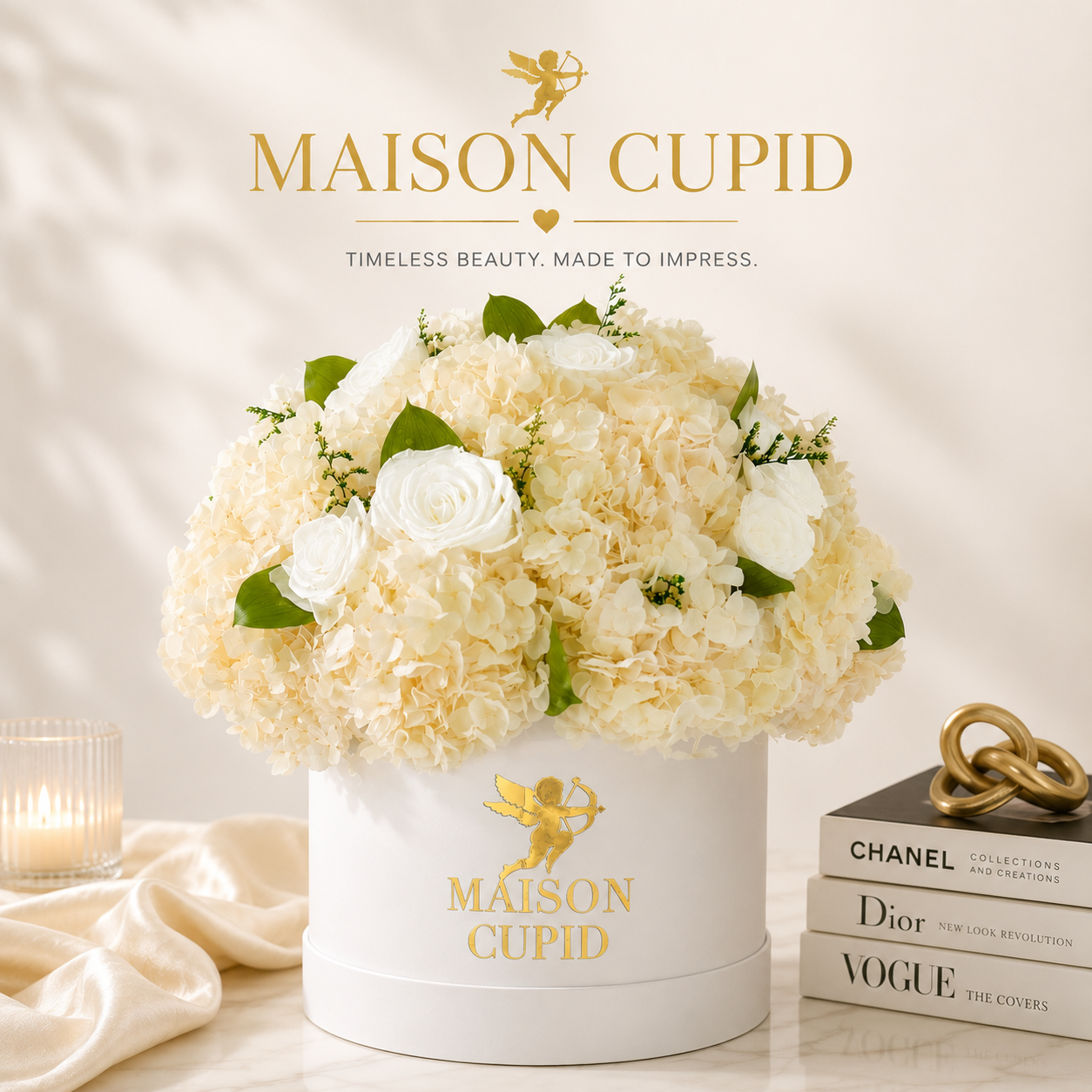
This is Maison Cupid: the myth reborn.
We do not send mere flowers.
We deliver essence.
Each box becomes a shrine.
Each rose, a curated relic of what matters most.
Because the truest love stories are not fleeting.
They are quiet, living, and eternal— rooted in meaning, preserved in elegance, and remembered through the gift of a rose that never fades.

Free delivery
Complimentary U.S. shipping on all orders over $199

Satisfied or refunded
Every rose is sent with care. If it's not perfect, we'll make it right.

Concierge Support
From checkout to delivery, we're here to perfect every detail.

Secure payments
Shop confidently with secure, encrypted checkout.